Betafpv Cameras & Drones
BetaFPV Drone Guide: Air65 II vs. Air75 II for Creators and Racers
Choosing the right beta fpv drone requires balancing airframe dimensions, motor power, and the environments where you intend to fly. Micro whoop quadcopters allow pilots to fly in places where larger aircraft are impractical, from compact indoor corridors to open outdoor parks. Finding the best betafpv whoop depends on whether your creative routine favors nimble…
As Amazon Associates, we earn from qualifying purchases. This means we may receive a small commission at no extra cost to you if you click through and make a purchase.
Choosing the right beta fpv drone requires balancing airframe dimensions, motor power, and the environments where you intend to fly. Micro whoop quadcopters allow pilots to fly in places where larger aircraft are impractical, from compact indoor corridors to open outdoor parks. Finding the best betafpv whoop depends on whether your creative routine favors nimble indoor trick execution or the outdoor momentum and speed needed for high-velocity freestyle and racing lines.
This betafpv drone comparison examines exactly 3 models from the brand’s latest generation: the BETAFPV Air65 II, the freestyle-focused BETAFPV Air75 II, and the race-ready BETAFPV Air75 II. Each aircraft shares foundational engineering, including the Matrix 1S 5IN1 II flight controller and impact-resistant polypropylene ducting, yet they diverge in motor stator size, KV ratings, and throttle characteristics. Evaluating these technical distinctions will help you decide which betafpv drone to buy for your personal piloting workflow.
Which BETAFPV FPV Drones Should You Buy
All 3 models on this page, side by side
| Model | Our score | Listing |
|---|---|---|
01 BETAFPV Air65 II Brushless Whoop Quadcopter |
Price | |
02 BETAFPV Air75 II Brushless Whoop Quadcopter |
Price | |
03 BETAFPV Air75 II Brushless Whoop Quadcopter |
Price |
Prices are read from the Amazon product listing and change there, not here. Scores are out of 10, based on listed specifications and buyer feedback.
Why each one is on the list
- Indoor micro freestyle and flying through tight domestic gaps: BETAFPV Air65 II Brushless Whoop Quadcopter.
- Outdoor freestyle lines and extended cruising sessions: BETAFPV Air75 II Brushless Whoop Quadcopter with 22000KV motors.
- Competitive track racing and explosive throttle acceleration: BETAFPV Air75 II Brushless Whoop Quadcopter with 28000KV motors.
01 BETAFPV Air65 II Brushless Whoop Quadcopter

Best for Indoor technical freestyle and tight gaps
Pros
- Lightweight 65mm frame
- High-KV 0702 motors
- Cushioned 3-point FC mount
- Durable brass bushings
Cons
- Higher outdoor wind drift
- Smaller propeller surface
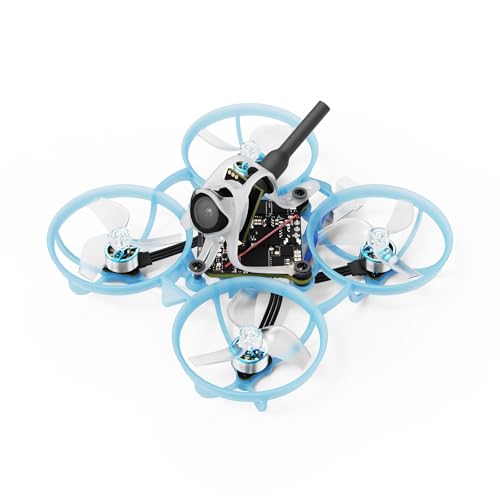
The BETAFPV Air65 II Brushless Whoop Quadcopter is an ultralight 1S micro platform engineered for nimble indoor agility and tight-space freestyle maneuvers. The foundation of this quadcopter is the Air65 champion frame, which uses impact-absorbing polypropylene material and refined duct geometry to protect internal electronics during hard collisions. Propulsion is driven by 0702 25000KV motors equipped with durable brass bushings, paired directly with Gemfan 1219S 3-blade propellers. This powertrain combination emphasizes smooth low-throttle torque and immediate control response, allowing pilots to navigate interior spaces, doorways, and tight gaps with fluid precision.
At the center of the airframe, the Matrix 1S 5IN1 II flight controller provides exceptional crash resistance. BETAFPV integrated a 3-point mounting system that creates cushioning space during heavy impacts, reducing stress on sensitive surface-mounted components and lowering the circuit damage rate by up to 80 percent. The flight controller features a 1.0-millimeter thickened printed circuit board layout and includes an integrated electronic speed controller rated for 12 amps continuous and 18 amps peak current. Unlike large autonomous camera platforms such as a dji air series drone, this 65mm whoop relies on manual acro handling and structural duct flexibility to withstand direct wall strikes without catastrophic component failure.
The Air65 II is an ideal match for hobbyists seeking an indoor winter flyer or creators wanting to practice freestyle maneuvers in confined living spaces. The package includes 18 items, providing spare propellers, mounting screws, a backup canopy, an adapter board, and an adapter cable for easy servicing. However, the Air65 II yields to larger 75mm models when flying in open outdoor fields, where its smaller propeller disc area and lighter overall inertia are more susceptible to wind drift.
- Propulsion system powered by 0702 25000KV motors with brass bushings and 1219S 3-blade props.
- Matrix 1S 5IN1 II flight controller with 3-point cushioning mount and 1.0mm thickened PCB.
- Impact-absorbing polypropylene Air65 champion frame and reinforced Air II canopy.
- High-output ESC supporting 12A continuous and 18A peak current loads.
03 BETAFPV Air75 II Brushless Whoop Quadcopter

Best for Competitive micro track racing dominance
Pros
- Explosive 7.1:1 thrust ratio
- Dual-ball bearing 28000KV motors
- Durable 12A continuous ESC
- Adjustable 15° to 45° canopy
Cons
- Higher battery power consumption
- Demands aggressive throttle control

Best for Long-flight outdoor freestyle cruising
Pros
- Up to 7:30 flight time
- Smooth 0802 22000KV motors
- Adjustable 15° to 45° canopy
- Efficient 0.1mm stator core
Cons
- Too fast for small bedrooms
- Larger overall footprint
Designed for pilots who want greater momentum and open-air versatility, the freestyle version of the BETAFPV Air75 II Brushless Whoop Quadcopter expands the airframe to a 75mm footprint. This model incorporates new-generation 0802 22000KV brushless motors built around an industry-first 0.1-millimeter stator core. The optimized magnetic and winding structure delivers outstanding low-end torque while conserving battery power. When paired with the specified 480 milliamp-hour battery capacity, this betafpv freestyle drone achieves flight times reaching up to 7 minutes and 30 seconds, giving creators extended airtime to capture smooth cinematic proximity lines.
Durability remains a core design priority through the Air75 II frame, which features connecting braces and a polypropylene blend engineered to disperse impact shocks. The quadcopter is capped with an upgraded Air II canopy featuring a revised curve and an adjustable camera bracket supporting tilt angles from 15 degrees to 45 degrees. Beneath the canopy, the Matrix 5IN1 II flight controller uses a 3-point shock-dampening mounting architecture, a 1.0-millimeter thickened PCB, and a robust 12A continuous (18A peak) ESC. While beginners often explore the hobby using simple toy drones like a holy stone drone mini, this betafpv brushless whoop provides genuine acro authority, tuneable camera angles, and true hobbyist flight dynamics.
This 22000KV configuration suits pilots who value prolonged stick time, efficient battery management, and outdoor stability in mild breezes. Its generous 7:30 endurance makes it particularly helpful for mastering throttle modulation without constant battery changes. However, it gives way to the Air65 II when flying in cramped bedrooms where the larger 75mm ducts feel constrained, and it concedes top-speed track performance to its high-KV racing sibling.
- Efficient 0802 22000KV brushless motors featuring an industry-first 0.1mm stator core.
- Impressive endurance delivering up to 7:30 flight time using a 480mAh battery.
- Upgraded Air II canopy offering an adjustable camera tilt angle between 15° and 45°.
- Matrix 5IN1 II flight controller with 12A continuous and 18A peak ESC capability.
03 BETAFPV Air75 II Brushless Whoop Quadcopter
Tuned for competitive track environments, the champion edition of the BETAFPV Air75 II Brushless Whoop Quadcopter focuses purely on acceleration and high-output thrust. In place of efficiency-focused windings, this setup is driven by max-power dual-ball bearing 0802 28000KV motors. These high-rpm stators unlock an extraordinary 7.1:1 thrust-to-weight ratio, providing explosive acceleration that allows racers to surge off starting blocks, punch through elevated race gates, and instantly recover from aggressive dives.
To handle the heavy electrical current spikes generated by aggressive racing, this model relies on the Matrix 5IN1 II flight controller with a 12A continuous and 18A peak ESC. The flight controller’s 3-point mounting system cushions impacts by up to 80 percent, safeguarding the 1.0-millimeter thickened PCB during high-speed gate strikes. The Air II canopy allows pilots to tilt the onboard camera between 15 degrees and 45 degrees, providing the steep forward sightlines necessary when flying at full forward pitch. While consumer pilots might rely on automated flight stabilization and obstacle avoidance on platforms such as drones with camera for adults dji, this champion whoop delivers raw, unassisted manual flight over 5.8 GHz and 2.4 GHz radio frequency systems.
This high-KV Air75 II model is built for competitive racers and aggressive freestyle hobbyists who require instantaneous throttle bursts and razor-sharp responsiveness. It dominates tight obstacle courses and outdoor sprint tracks. Nevertheless, because its 28000KV motors draw substantial current and reduce flight endurance, it steps aside for the 22000KV version for relaxed cruising, and it remains overly aggressive for small living room navigation where the Air65 II excels.
- High-performance dual-ball bearing 0802 28000KV motors for rapid spool-up.
- Explosive 7.1:1 thrust-to-weight ratio engineered for pro-level racing acceleration.
- Reinforced Air II canopy with 15° to 45° adjustable camera tilt mechanism.
- Matrix 5IN1 II flight controller with 1.0mm thickened PCB and 12A continuous ESC.
What Sets These Models Apart
When weighing Air65 II vs Air75 II, the decision hinges on how wheelbase geometry and motor KV ratings influence flight characteristics. While all three models share the resilient Matrix 5IN1 II flight controller and impact-absorbing polypropylene frames, their specific motor outputs and canopy capabilities adapt them to contrasting piloting requirements.
| Model Name | Motor Specifications | Primary Flight Focus | Camera Tilt Range |
|---|---|---|---|
| BETAFPV Air65 II Brushless Whoop Quadcopter | 0702 25000KV (Brass Bushings) | Indoor Freestyle & Tight Gaps | Fixed Air II Canopy |
| BETAFPV Air75 II Brushless Whoop Quadcopter (22000KV) | 0802 22000KV (0.1mm Stator Core) | Outdoor Cruising & 7:30 Flight Time | 15° to 45° Adjustable |
| BETAFPV Air75 II Brushless Whoop Quadcopter (28000KV) | 0802 28000KV (Dual-Ball Bearing) | Pro Racing & 7.1:1 Thrust Ratio | 15° to 45° Adjustable |
Buying Tips for BETAFPV FPV Drones
When selecting an FPV whoop, your primary flight space should be the deciding factor between 65mm and 75mm platforms. The compact 65mm airframe is purpose-built for indoor flight, where its short wheelbase and lower overall weight allow it to deflect off furniture and navigate tight corridors without losing stability. In contrast, a 75mm wheelbase catches more air and generates greater momentum, making it significantly more stable when tackling outdoor breezes, though it demands more open space when flown indoors.
Motor KV ratings directly govern throttle feel and battery life across the lineup. A higher KV rating, such as the 28000KV motors on the racing Air75 II, delivers an explosive 7.1:1 thrust ratio ideal for punch-outs and clearing obstacles, but it draws higher current that reduces flight duration. For pilots who prioritize extended practice sessions and relaxed lines, lower KV motors like the 22000KV configuration provide a smoother throttle response curve and allow flights lasting up to 7 minutes and 30 seconds when using a 480mAh 1S battery.
Crash resistance and component protection are essential when operating a betafpv whoop quadcopter in manual acro mode. BETAFPV addresses durability through the Matrix 5IN1 II flight controller, which utilizes a 3-point cushioned mount and a 1.0mm thickened PCB to lower impact stress by up to 80 percent. Choosing an airframe with resilient polypropylene ducts and an adjustable canopy tilt between 15 and 45 degrees ensures you can withstand frequent impacts while adapting your camera angle as your forward flight speeds increase.
FAQ
What is the main flight difference between the Air65 II and Air75 II?
The primary distinction lies in airframe size, motor dimensions, and flight stability. The Air65 II features a compact 65mm frame and 0702 25000KV motors tailored for tight indoor spaces and agile gap navigation. The Air75 II models utilize a 75mm frame with larger 0802 motors, offering greater momentum, improved outdoor wind handling, higher speeds, and longer flight times.
Can the BETAFPV Air65 II be flown outdoors safely?
The Air65 II can fly outdoors during calm conditions with minimal wind. Its 0702 25000KV motors and 12A continuous ESC generate ample power for backyard freestyle. However, because of its lightweight build and small propeller disc area, noticeable breezes will push the quadcopter off course more easily than a 75mm platform.
How does the 22000KV motor differ from the 28000KV motor on the Air75 II?
The 22000KV motor is tuned for electrical efficiency and extended flight duration, delivering smooth throttle control and up to 7:30 of airtime with a 480mAh battery. The 28000KV motor features dual-ball bearings and delivers an explosive 7.1:1 thrust-to-weight ratio designed for competitive track racing and high-speed punch-outs at the expense of flight time.
Why is the 3-point flight controller mounting important on BetaFPV whoops?
The 3-point mounting system on the Matrix 5IN1 II flight controller introduces cushioning space that absorbs physical shocks during hard landings and crashes. By isolating the flight controller and its thickened 1.0mm PCB from direct frame impacts, this design reduces component stress and lowers the circuit damage rate by up to 80 percent.
What camera angle range does the Air II canopy provide?
On the Air75 II models, the Air II canopy includes an adjustable bracket that supports camera tilt angles from 15 degrees to 45 degrees. Lower tilt settings near 15 degrees suit slow indoor cruising and proximity flying, while steeper angles up to 45 degrees allow pilots to see the horizon clearly during high-speed forward racing.


