Blue Marble Other
National Geographic Gemstone Kits Compared: Hands-On Excavation Guide
Choosing a suitable national geographic kit gemstone project depends on balancing dig brick physical scale, specimen yield, excavation tool durability, and your intended workspace setup. Whether you are setting up macro b-roll for educational video content, introducing an aspiring geologist to mineral identification, or looking for an immersive tabletop unboxing project, the density of the…

As Amazon Associates, we earn from qualifying purchases. This means we may receive a small commission at no extra cost to you if you click through and make a purchase.
Choosing a suitable national geographic kit gemstone project depends on balancing dig brick physical scale, specimen yield, excavation tool durability, and your intended workspace setup. Whether you are setting up macro b-roll for educational video content, introducing an aspiring geologist to mineral identification, or looking for an immersive tabletop unboxing project, the density of the plaster matrix and the diversity of minerals dictate the entire flow of the session.
This national geographic gemstone kit comparison examines six distinct boxed kits from the brand, ranging from portable single-session excavation blocks to massive hundred-specimen group bricks and expansive boxed sorting collections. Each package differs significantly in target age rating, required cleanup preparation, included accessories, and whether the focus centers on mechanical chiseling or mineralogical cataloging.
Which National Geographic Gemstone Kits Should You Buy
All 6 models on this page, side by side


Prices are read from the Amazon product listing and change there, not here. Scores are out of 10, based on listed specifications and buyer feedback.
Why each one is on the list

Best for Quick tabletop sessions and younger beginners
Pros
- Compact manageable brick size
- Includes 10 real gemstones
- Quick visual identification sheet
Cons
- Short overall excavation time
- Fewer specimen varieties
- For balanced excavation time and diverse crystal varieties: NATIONAL GEOGRAPHIC Mega Gemstone Dig Kit
- For compact tabletop sessions and quick unboxing demonstrations: National Geographic Gemstone Dig Kit
- For cooperative projects and extended unboxing sessions: National Geographic Gigantic Gemstone Dig Kit (50 Gems)
- For multi-session endurance digging and high-yield collection building: National Geographic Gigantic Gemstone Dig Kit (100 Gems)
- For immediate mineral sorting and geode cracking without plaster chiseling: National Geographic Rock Collection with 300+
- For thematic specimen collecting and wearable display options: National Geographic Birthstone Dig Kit
01 NATIONAL GEOGRAPHIC Mega Gemstone Dig Kit

Best for Balanced solo excavation and crystal discovery
Pros
- 15 genuine mineral specimens
- Informative 16-page color guide
- Includes complete starter toolset
Cons
- Plaster generates dust without water
- Single chisel limits group digging
The NATIONAL GEOGRAPHIC Mega Gemstone Dig Kit serves as an industry standard for structured geological hobby activities. Packed within a solid excavation matrix, this kit contains 15 genuine mineral specimens including pyrite, amethyst, tiger’s eye, fluorite, quartz, obsidian, and aventurine. The physical density of the plaster block provides a genuine excavation experience that requires deliberate chiseling, brushing, and patience, making it a compelling option for creators filming methodical unboxing sequences or families seeking an authentic educational project.
Included with the block are essential workshop tools: a chisel, a cleaning brush, a handheld magnifying glass, and a comprehensive 16-page, full-color learning guide. The guide illustrates how geological formations occur and how raw minerals are extracted worldwide, helping participants identify each specimen as it is chiseled out of the matrix. For hobbyists evaluating which national geographic gemstone kit to buy for an afternoon project, this configuration hits an ideal midpoint between excavation duration and specimen count, establishing itself as a strong contender for the best national geographic gem dig kit in single-person settings.
While the kit delivers an engaging excavation rhythm, solo diggers should plan on dedicating one to two hours of steady manual chiseling to extract every stone cleanly. Creators looking for a broader array of educational play kits can explore other national geographic toys for kids to supplement their science-themed content schedules. When a project demands an even larger block for multi-person workshops, this 15-gem block yields to the higher-capacity Gigantic series.
- Contains 15 real gemstones including pyrite, amethyst, tiger’s eye, fluorite, quartz, and obsidian
- Includes full excavation toolset with chisel, detailing brush, and magnifying glass
- Features a 16-page full-color learning guide illustrating gemstone formation and mining
- Engineered for STEM education with an official age rating of 8 years and up
02 National Geographic Gemstone Dig Kit
The National Geographic Gemstone Dig Kit provides a streamlined, compact excavation footprint containing 10 genuine gemstones. Within this block, diggers can uncover specimens such as amethyst, a miniature geode, pyrite, rose quartz, gray agate, green aventurine, green fluorite, snowflake obsidian, sodalite, and tiger’s eye. The reduced physical volume of the brick makes it exceptionally manageable for smaller tabletops, compact desktop filming setups, or quick classroom demonstrations where time constraints prevent hours of heavy chiseling.
This national geographic excavation kit supplies a dedicated excavation tool, a fine-bristle dusting brush, a magnifying glass, and a full-color gemstone identification sheet. The reference sheet features clear macro imagery alongside factual overviews for each stone, enabling rapid visual confirmation as soon as a mineral edge breaks free from the plaster. The workflow here is fast-paced and immediate, offering a lower barrier to entry for beginners who want the satisfaction of gem extraction without physical hand fatigue.
Because the specimen yield is capped at 10 pieces, the extraction phase can conclude relatively quickly compared to larger alternatives. Hobbyists building out an extensive desktop display case may soon outgrow the introductory specimen count. When your project scope requires rarer collector themes like mineral birthstones or massive variety trays, this standard set naturally serves as a stepping stone toward specialized alternatives.
- Contains 10 genuine mineral specimens including geode, snowflake obsidian, sodalite, and rose quartz
- Includes essential excavation tool, cleaning brush, and handheld magnifying glass
- Supplied with a full-color identification sheet packed with specimen facts
- Compact brick volume ideal for rapid unboxing and concise activity windows
04 National Geographic Gigantic Gemstone Dig Kit
Best for Extended multi-session endurance unboxing projects
Pros
- Massive 100-gemstone yield
- Includes 2 digging tools
- Dedicated fabric storage pouch
Cons
- Significant hand fatigue if rushed
- Requires multi-session cleanup management

Best for Collaborative family digs and group workshops
Pros
- High yield of 50 gemstones
- Jumbo brick accommodates multiple workers
- Accessible age rating of 4+
Cons
- Produces heavy plaster debris
- Requires large workspace tray
The 50-specimen National Geographic Gigantic Gemstone Dig Kit scales up the traditional excavation block into a true multi-hour endurance build. Encased in a jumbo dig brick, this kit challenges hobbyists to uncover 50 real gemstones sourced from around the globe, including popular crystals like amethyst, tiger’s eye, and quartz varieties. The sheer surface area of the block accommodates multiple workers simultaneously, transforming what is typically an isolated solo craft into an engaging collaborative project.
The packaging includes specialized digging tools, an inspection magnifying glass, an educational learning guide, and an illustrated identification sheet. Rated for ages 4 and up, the plaster formulation allows accessible digging progress while maintaining enough resistance to keep the excavation satisfying. For video creators, the repetitive discovery moments offer abundant opportunities to capture macro reveal shots, color-grading textures, and ASMR-style chiseling audio across an extended multi-part upload series.
Managing a brick of this magnitude requires dedicated prep work. Excavating 50 specimens generates substantial plaster dust and debris, requiring a broad tray or plastic drop cloth. Hobbyists seeking a long-format national geographic gigantic gemstone dig kit experience will find this 50-piece edition a balanced compromise between massive yield and manageable cleanup before stepping up to the 100-piece flagship.
- Jumbo excavation brick containing 50 genuine gemstones from worldwide deposits
- Includes full-color learning guide and illustrated specimen identification reference
- Supplied with real geologist dig tools and close-up inspection magnifying lens
- Broad age suitability rated for ages 4 and up to encourage cooperative family projects
04 National Geographic Gigantic Gemstone Dig Kit
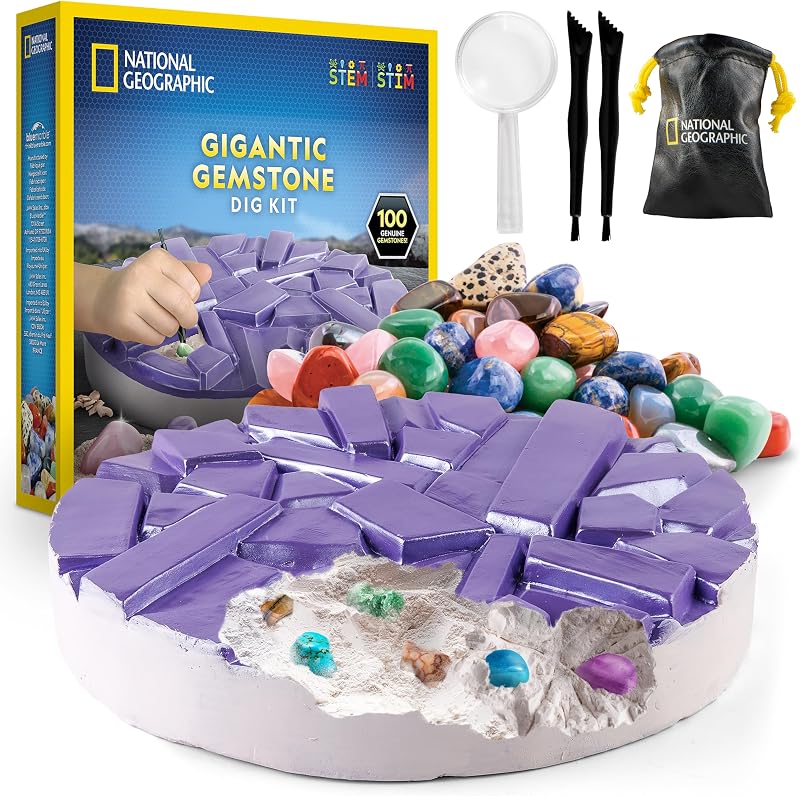
The 100-gemstone version of the National Geographic Gigantic Gemstone Dig Kit represents the maximum physical excavation volume in the lineup. Packing 100 genuine minerals and crystals into a colossal dig brick, this kit is built for extended hobby sessions, multi-day summer camp stations, or comprehensive streaming marathons. The specimen roster incorporates staples like amethyst, tiger’s eye, quartz crystals, and an assortment of colorful tumbled stones embedded throughout the plaster matrix.
To support shared workloads, the package provides two excavation tools, a detailing brush, a magnifying glass, a full-color learning guide, an identification sheet, and a fabric storage pouch. The addition of dual tools acknowledges that tackling a block of this magnitude is best approached as a team effort. The included storage pouch provides immediate utility, giving users a safe place to stash excavated treasures across successive digging sessions without cluttering the workspace.
Due to the sheer density and mineral count, completing this dig requires serious commitment and periodic water misting to keep dust under control. If your objective is simply examining and classifying earth minerals without clearing out pounds of plaster residue, a loose boxed collection will serve your workflow far better than this heavy-duty excavation brick.
- Massive single excavation brick packed with 100 genuine mineral and crystal treasures
- Includes two dedicated excavation tools to facilitate cooperative multi-person digging
- Supplied with a fabric storage pouch for organizing specimens across multi-day sessions
- Contains full-color identification guide and comprehensive learning manual
05 National Geographic Rock Collection with 300+
Best for Direct mineral cataloging without plaster mess
Pros
- Over 300 authentic specimens
- Includes 2 break-open geodes
- No plaster chiseling required
Cons
- No simulated excavation activity
- Small specimen sorting requires care
Departing entirely from the plaster excavation format, the National Geographic Rock Collection with 300+ focuses on sorting, tactile evaluation, and specimen cataloging. This expansive national geographic mineral kit includes over 300 genuine rock, mineral, and crystal specimens spanning varieties such as amethyst, aventurine, blue calcite, blue quartz, dalmatian jasper, desert rose, fluorite, hematite, pumice, red jasper, quartz points, selenite, snowflake obsidian, sodalite, and tiger’s eye.
Rather than chiseling through rock matrix, users engage in physical geology through hands-on cracking of two included premium break-open geodes to expose unweathered crystal centers. The kit also includes an inspection magnifying glass, a full-color learning guide, and a closable storage bag for sorting and carrying favorite minerals. For creators producing educational taxonomy content or tabletop mineral showcases, this national geographic rock collection 300 provides instant visual variety without any plaster dust cleanup.
Hobbyists who appreciate tracking natural details in the field, much like birders glassing terrain through bushnell binoculars for bird watching, will enjoy the methodical identification process facilitated by the guide. However, because the vast majority of stones arrive loose in bags, this product does not offer the mechanical discovery process found in the dig brick kits.
- Features over 300 real rock, mineral, and crystal specimens from global locations
- Includes two authentic break-open geodes for hands-on crystal revelation
- Contains exotic specimens such as desert rose, selenite, blue calcite, and pumice
- Supplied with closable storage bag, learning guide, and inspection magnifier
06 National Geographic Birthstone Dig Kit
Best for Thematic collecting and personalized gemstone gifts
Pros
- Contains 12 authentic birthstones
- Includes wearable keychain bottle
- Features ruby sapphire and emerald
Cons
- Modest 12-piece specimen count
- Small birthstones require careful handling
The National Geographic Birthstone Dig Kit trades raw specimen quantity for curated thematic appeal. Encased inside an attractively molded dig brick are 12 genuine precious and semi-precious birthstones representing each month of the calendar year: garnet, diamond, ruby, pearl, sapphire, amethyst, emerald, opal, blue topaz, citrine, aquamarine, and peridot. This focused mineral selection makes the kit particularly memorable for personalized gifting, birthday-themed educational events, and milestone celebration videos.
The kit comes equipped with an excavation tool, a soft dusting brush, a magnifying glass, a detailed learning guide, and a specialty display bottle with an integrated keychain attachment. This accessory enables users to select their favorite discovered stone—such as their personal birthstone—and secure it inside the transparent capsule for everyday carry or desk display. The educational guide covers the historical folklore, geographic origins, and geological formation of each specific birthstone.
Creators documenting macro reveal sequences can record hands-free b-roll using modern wearable capture devices, perhaps after browsing a meta glasses clearance guide to upgrade their workshop camera rig. The physical dig time is moderate, making it accessible for ages 8 and up. While it lacks the sheer mineral volume of the Gigantic series, its curated collection of high-interest stones like ruby and sapphire sets it apart from standard quartz-heavy assortments.
- Contains 12 genuine birthstone minerals including real diamond, ruby, sapphire, and pearl
- Includes a specialized clear display bottle with keychain hardware for portable display
- Supplied with dedicated digging tool, soft cleaning brush, and magnifying glass
- Comprehensive learning guide detailing the geological characteristics of birthstones
What Sets These Models Apart
| Model | Specimen Count | Primary Activity Type | Age Rating | Key Included Accessories |
|---|---|---|---|---|
| Mega Gemstone Dig Kit | 15 Gemstones | Single-brick excavation | 8 years and up | Chisel, brush, magnifying glass, 16-page guide |
| Gemstone Dig Kit | 10 Gemstones | Single-brick excavation | 8 years and up | Dig tool, brush, magnifying glass, ID sheet |
| Gigantic Gemstone Dig Kit (50 Gems) | 50 Gemstones | Jumbo-brick excavation | 4 years and up | Dig tools, magnifying glass, learning guide, ID sheet |
| Gigantic Gemstone Dig Kit (100 Gems) | 100 Gemstones | Collaborative giant-brick excavation | 4 years and up | 2 Dig tools, brush, magnifying glass, storage pouch, guide |
| Rock Collection with 300+ | 300+ Rocks & Minerals | Sorting, classification & geode cracking | Kid | 2 break-open geodes, closable storage bag, magnifier, guide |
| Birthstone Dig Kit | 12 Birthstones | Thematic brick excavation | 8 years and up | Dig tool, brush, magnifier, display bottle keychain, guide |
Buying Tips for National Geographic Gemstone Kits
Setting up your workspace properly makes a massive difference when taking on plaster-based excavation kits. Dry plaster naturally generates airborne dust during chiseling. Working inside a deep plastic rimmed tray, using a damp sponge, or utilizing a light water spray bottle directly on the brick matrix softens the plaster compound, suppresses particulate dust, and significantly eases chisel carving. For video production or tabletop streaming, a moistened block also reduces chalky residue on camera lenses and keeps mineral colors vibrant during immediate unboxing reveals.
Evaluating the intended group size and session length is equally vital when selecting between these kits. Single-brick models with 10 to 15 specimens suit individual focus sessions lasting under two hours, preventing physical hand fatigue. Conversely, the 50 and 100-piece gigantic bricks require substantial spatial clearance and are best suited for collaborative group activities or ongoing projects tackled over multiple sittings. Make sure you have small organizing trays or sorting bins ready to segregate wet specimens as they emerge.
Finally, decide whether your primary hobby objective centers on the tactile excavation process or on mineralogical study. If you or your students prefer sorting, examining crystal habits, and classifying mineral chemistry under magnification without scraping plaster, loose bulk sets offer far more specimen diversity per square inch. If the joy comes strictly from the simulated paleontology and geology field experience of chipping away matrix to reveal hidden treasure, a dedicated dig brick remains the undisputed choice.
FAQ
How do you soften a National Geographic gemstone dig brick during excavation?
Lightly misting the plaster block with clean water from a spray bottle or dabbing the surface with a damp sponge softens the material significantly. This reduces the force needed to chisel into the matrix, cuts down on chalky airborne dust, and helps reveal specimen coloration without scratching the stones.
Are the specimens inside National Geographic gemstone kits genuine stones?
Yes, all six kits covered in this guide feature real geological specimens, including rough crystals, polished tumble stones, minerals, and break-open geodes. The specific varieties range from common minerals like quartz, jasper, and pyrite up to genuine birthstones such as ruby, sapphire, and pearl.
What is the main difference between the Mega Dig Kit and the Gigantic Dig Kit?
The primary differences lie in the overall brick dimensions, tool allocations, and specimen yields. The Mega Gemstone Dig Kit contains 15 specimens within a standard-sized brick designed for a single user, whereas the Gigantic Gemstone Dig Kits contain either 50 or 100 specimens inside significantly larger bricks engineered for multi-hour or group excavation workflows.
Does the 300-piece rock collection require physical digging?
No, the 300-piece collection is not an excavation brick kit. It is a boxed geological collection containing loose raw and polished specimens designed for sorting, examination, and identification. The only mechanical activity included is manually cracking open the two supplied whole geodes to expose their hollow crystal interiors.
What tools are recommended for cleaning specimens after excavation?
After unearthing stones from the plaster block, soaking them in a small bowl of warm water and scrubbing remaining residue with an old soft toothbrush or the included detailing brush cleans them thoroughly. Drying them with a microfiber cloth prepares them for optimal viewing under the included magnifying glass.


