Blue Marble Home & Living
National Geographic Toys for Kids: Comparing Hands-On STEM Kits
Selecting the best national geographic toys for kids requires matching a child’s developmental age and curiosity style to the right category of scientific discovery. National Geographic STEM toys, produced under license by Blue Marble and manufactured by JMW Sales, translate complex scientific phenomena into tangible, interactive projects. Whether your child gravitates toward earth sciences, outdoor…

As Amazon Associates, we earn from qualifying purchases. This means we may receive a small commission at no extra cost to you if you click through and make a purchase.
Selecting the best national geographic toys for kids requires matching a child’s developmental age and curiosity style to the right category of scientific discovery. National Geographic STEM toys, produced under license by Blue Marble and manufactured by JMW Sales, translate complex scientific phenomena into tangible, interactive projects. Whether your child gravitates toward earth sciences, outdoor physical aerodynamics, zoological observation, or stage-ready chemical reactions, choosing between these kits comes down to whether you want an observational habitat, an energetic outdoor physical project, or structured tabletop experiments.
In this national geographic toys comparison, we evaluate exactly five distinct models to help you decide which national geographic toys to buy for birthdays, holidays, or home learning. The lineup spans botanical craft habitats, dynamic outdoor projectile systems, backyard insect discovery habitats, and theatrical chemistry kits. Across these five selections, the operational friction varies from quick-setup outdoor launches to multi-day botanical cultivation and multi-step laboratory routines. Evaluating their age boundaries, physical components, and play cadence clarifies the ideal fit for your young learner.
Which National Geographic Toys for Kids Should You Buy
All 5 models on this page, side by side


Prices are read from the Amazon product listing and change there, not here. Scores are out of 10, based on listed specifications and buyer feedback.
Why each one is on the list
- For children interested in botany, earth materials, and bedside displays: National Geographic Light-Up Dinosaur Terrarium Kit.
- For energetic outdoor play centered on aerodynamics and motion physics: National Geographic LED Air Rocket Launcher.
- For early childhood naturalists exploring backyard insects and entomology: National Geographic Bug Catcher Kit.
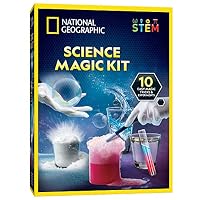
- For older children seeking an extensive library of staged chemistry demonstrations: National Geographic Science Magic Kit.
- For theatrical presentation skills paired with structured chemical reactions: National Geographic Magic Chemistry.
01 National Geographic Light-Up Dinosaur Terrarium Kit

Best for Young botanists and dinosaur enthusiasts
Pros
- USB-powered light lid
- Real mineral specimens included
- Complete planting accessories
Cons
- Requires days for seed sprouting
The National Geographic Light-Up Dinosaur Terrarium Kit offers young creators an engaging synthesis of geology, botany, and craft design. Designed for children ages six and up, this self-contained indoor habitat combines fast-growing chia and ryegrass seeds with authentic geological specimens to produce a miniature prehistoric ecosystem. The container features a wide-mouth opening specifically proportioned for smaller hands to arrange decorative river stones, colored pebbles, a faux succulent, and two detailed dinosaur figurines without spilling materials. Because young hobbyists often enjoy displaying their creative work, the kit incorporates a USB-powered light lid that illuminates the miniature garden and doubles as an evening night light, eliminating the recurring maintenance of replacing standard household batteries.
In terms of scientific learning, the terrarium emphasizes botanical germination and mineralogy. Rather than including basic plastic rocks, Blue Marble packages authentic mineral specimens—specifically blue calcite, rose quartz, and green aventurine—allowing children to observe genuine crystalline structures. If your family already explores earth sciences through a national geographic kit gemstone collection, these included mineral specimens provide immediate crossover appeal. Setup friction is notably low: children position the reversible laminated backdrop, distribute the growing layers, plant the provided seeds, and use the included spray bottle to mist the soil daily.
This model suits patient learners who appreciate observing changes over days and weeks as seedlings sprout and flourish across the rock formations. Where this terrarium gives way to other models in the lineup is immediate physical action: it is an observational indoor project rather than an energetic physical activity or a fast-paced science demonstration.
- USB-powered illumination lid functions as a bedside night light without disposable batteries
- Wide-mouth jar construction allows comfortable decorating and maintenance for smaller hands
- Genuine blue calcite, rose quartz, and aventurine mineral specimens complement the dinosaur display
- Complete set includes chia and ryegrass seeds, spray bottle, river stones, pebbles, and two dinosaur figurines
02 National Geographic LED Air Rocket Launcher

Best for Active outdoor physics exploration
Pros
- Launches up to 100 feet
- Switchable LED light-up rockets
- Adjustable launch tube angles
Cons
- Requires large open outdoor space
The National Geographic LED Air Rocket Launcher shifts the learning environment from quiet tabletop observation to high-energy outdoor aerodynamics. Rated for kids ages six and up, this Amazon-exclusive launch system relies on kid-powered kinetic force rather than electronic motors or chemical propellants. Kids run and stomp on the extra-large foot pump to force air through the adjustable launch tube, propelling foam-tipped rockets up to one hundred feet into the air. This active play pattern fosters physical coordination, balance, and gross motor exercise while introducing early principles of trajectory and thrust.
Visibility and evening usability serve as standout design elements here. Each of the three included foam-tipped rockets features integrated LED lights that can be switched on or off, transforming outdoor launch sessions at dusk into a luminous aerial display. The accompanying full-color learning guide builds upon the fun by outlining structured rocket flight experiments, explaining the mechanics of aerodynamics, air compression, and the physics governing projectile motion. The adjustable launch tube lets children alter flight angles systematically, turning casual backyard launches into an iterative physics laboratory.
This launcher suits active children who prefer kinetic, outdoor play over sitting quietly at a desk. It yields instantaneous cause-and-effect results that immediately hold a child’s attention. However, this model gives way to indoor kits like the terrarium or chemistry sets when outdoor space is restricted, as reaching maximum altitudes requires an open field or broad lawn clear of tree canopies and rooftops.
- Air-powered foot pump propels foam-tipped rockets to heights reaching one hundred feet
- Integrated switchable LED lighting modules built into each rocket for evening visibility
- Adjustable launch tube allows systematic testing of varied launch trajectories and flight angles
- Included full-color learning guide details core physics concepts, aerodynamics, and motion experiments
03 National Geographic Bug Catcher Kit

Best for Preschoolers exploring backyard nature
Pros
- Dual magnifying observation viewers
- Gentle insect capture toolset
- 360-degree clear viewing habitat
Cons
- Requires seasonal backyard insects
The National Geographic Bug Catcher Kit provides an approachable, tactile introduction to biology and field entomology for children ages four and up. Designed as an Amazon exclusive, this outdoor exploration system includes a dedicated catching net, precision tweezers, and a scissor-style bug catcher engineered to capture small insects without harming them. The centerpiece of the set is an observation habitat featuring a 360-degree transparent viewing container, a removable base for placing natural foliage, and an easy-open latching lid that keeps specimens safely contained during study.
Observation capabilities are elevated through two distinct built-in magnifying viewers mounted on the lid. One viewer offers a stationary, high-clarity view of the habitat floor, while the secondary magnifying glass telescopes and articulates, allowing children to track crawling or climbing insects across three dimensions. By encouraging children to gather leaves, twigs, and soil inside the removable base, the kit demonstrates how natural microhabitats support living creatures before releasing them back into the garden.
This kit is ideal for younger preschoolers and primary grade explorers developing early hand-eye coordination and observational patience. It bridges the gap between active yard exploration and quiet scientific study. Still, the bug catcher gives way to the brand’s chemistry sets when families seek structured indoor experiment workflows that do not depend on local weather conditions or seasonal insect availability.
- Dual magnifying viewers include a stationary lens and a telescoping, movable lens for dynamic insect tracking
- Transparent 360-degree habitat container equipped with a secure latching lid and removable base
- Gentle capture tools include scissor-style bug catcher, sweep net, and specialized tweezers
- Engineered for young naturalists ages four and up to promote observation skills and hand-eye coordination
04 National Geographic Science Magic Kit

Best for Kids wanting massive experiment variety
Pros
- Over 100 total experiments
- Materials for 20 activities included
- Bonus guide with 85 extra tricks
Cons
- Household items needed for bonus guide
The National Geographic Science Magic Kit blends theatrical illusion with rigorous scientific principles, offering one of the best national geographic science kits for kids ages eight and up. This mega science kit features all necessary chemicals, specialty apparatus, and lab components to conduct twenty distinct magic-themed science experiments directly from the box. Additionally, Blue Marble includes a bonus booklet outlining more than eighty-five additional magic tricks that utilize common household items, bringing the total experiment count to over one hundred activities.
The primary appeal of this kit lies in how it reframes fundamental chemistry and physics concepts as performance magic. Rather than simply observing color changes in a beaker, children learn how chemical reactions produce instant color shifts, create optical illusions, or manipulate surface tension to astonish an audience. Working through the experiments on a dedicated children’s activity surface, such as a sturdy kidkraft table and chairs, helps young scientists organize test tubes, powders, and tools safely during each sequence.
This extensive kit suits older elementary students and middle schoolers who thrive on diverse challenges and have the focus to manage multi-step procedures. Its breadth provides weeks of educational discovery. However, for families wanting a quick, single-session gift with minimal prep or younger children who might feel overwhelmed by a library of one hundred experiments, this mega set gives way to more focused options like the ten-trick magic chemistry set.
- Complete materials and specialized apparatus included for twenty core magic-themed experiments
- Comprehensive bonus experiment guide outlines over eighty-five additional household science activities
- Covers fundamental chemistry mechanisms, fluid dynamics, and optical physical reactions
- Designed for young scientists ages eight and up seeking extensive multi-session experiment variety
05 National Geographic Magic Chemistry
Best for Aspiring performers focused on chemistry
Pros
- Included magic wand and gloves
- Self-contained experiment tools
- Illustrated science experiment guide
Cons
- Fewer experiments than mega kit
The National Geographic Magic Chemistry set targets aspiring young stage performers who want to master a curated repertoire of chemical illusions. Developed as an Amazon exclusive for children ages eight and up, this specialized kit packages ten distinct, high-impact science experiments framed as magic tricks. Children learn to make a coin appear to float on liquid, cause water to change color instantaneously, and trigger an exothermic polymer reaction that makes snow magically materialize before viewers’ eyes.
To emphasize the theatrical experience, Blue Marble equips the set with costume accessories, including a child-sized magic wand and white performance gloves. The included experiment guide pairs kid-friendly, illustrated step-by-step procedures with detailed explanations of the real-world science behind each illusion. Kids are guided through the exact techniques professional scientists and illusionists use to engage audiences, transforming standard STEM education into a public speaking and confidence-building exercise.
Unlike broader science kits that may lack specific specialized lab tools, this set provides every required instrument to begin working immediately. When parents want an engaging alternative to screen time or a tablet computer amazon interface, this kit provides direct physical problem-solving. It suits children who prefer mastering a concise set of polished demonstrations rather than navigating dozens of separate guides. It gives way to the larger Science Magic Kit if your child exhausts the ten included tricks and desires a broader library of ongoing chemistry projects.
- Ten focused chemistry experiments structured specifically as interactive performance magic tricks
- Performance accessories include white magician gloves and a magic wand for dramatic presentation
- Included illustrated guide reveals scientific principles and presentation techniques used by scientists
- Self-contained kit includes all specialized tools and reagents needed to start experiments right away
What Sets These Models Apart
| Model | Target Age Range | Primary Scientific Discipline | Operating Environment |
|---|---|---|---|
| National Geographic Light-Up Dinosaur Terrarium Kit | Ages 6 and up | Botany and Geology | Indoor Tabletop |
| National Geographic LED Air Rocket Launcher | Ages 6 and up | Aerodynamics and Physics | Outdoor Open Field |
| National Geographic Bug Catcher Kit | Ages 4 and up | Entomology and Biology | Backyard and Field |
| National Geographic Science Magic Kit | Ages 8 and up | Chemistry and Physical Illusions | Indoor Lab Surface |
| National Geographic Magic Chemistry | Ages 8 and up | Applied Chemistry and Stage Magic | Indoor Performance Area |
Evaluating national geographic stem toys against practical play environments reveals significant differences in operational flow. While the botanical terrarium requires ongoing daily observation and patience over several weeks, the outdoor air rocket launcher delivers immediate physical feedback through kinetic force and aerodynamic flight. In contrast, the insect habitat relies on real-world biological discovery during warm weather months, requiring gentle handling and timely release of live specimens back into nature.
The two chemistry kits represent distinct workflow approaches to laboratory science. The Science Magic Kit provides a vast catalog spanning one hundred total activities, making it ideal for dedicated hobbyists who enjoy cataloging materials and sourcing supplemental household ingredients. The Magic Chemistry set limits its scope to ten polished tricks, packaging costume accessories that encourage theatrical delivery and self-contained demonstrations without requiring extensive setup.
Buying Tips for National Geographic Toys for Kids
When selecting among national geographic toys for kids, your primary consideration should be matching the product’s developmental requirements with your child’s natural play patterns. For younger children between ages four and six, tactile sets such as the Bug Catcher Kit or Dinosaur Terrarium eliminate frustrating multi-step measurement tasks. These products prioritize visual exploration, sensory engagement, and manual dexterity through large tools, intuitive latching lids, and wide container openings.
For older children ages eight and up, pay attention to the division between consumable chemistry supplies and reusable mechanical components. The LED Air Rocket Launcher offers virtually unlimited replay value without replenishing chemicals, making it an excellent investment for families with energetic siblings or access to open parks. Conversely, the chemistry sets feature finite chemical reagents for their core demonstrations, though kits like the Science Magic Kit compensate by providing extensive instructions for experiments using everyday pantry staples.
Finally, evaluate the supervision level required for each activity. Outdoor launchers and magnifying insect catchers allow children to explore independently in safe outdoor settings once basic safety guidelines are established. Chemistry sets and botanical planting projects benefit from adult presence, both to protect tabletop surfaces from liquid spills and to guide young learners through scientific explanations in the included full-color study guides.
FAQ
Are National Geographic toys made directly by National Geographic?
National Geographic toys are developed and manufactured through licensing partnerships. Blue Marble, an award-winning toy development company, designs and distributes these kits with manufacturing handled by JMW Sales, Inc., pairing National Geographic educational branding with dedicated STEM toy production standards.
What power source does the dinosaur terrarium light use?
The National Geographic Light-Up Dinosaur Terrarium Kit features a light-up lid powered by an included USB cable. This eliminates the need for disposable alkaline batteries and allows the terrarium to run continuously as a night light when connected to a standard USB power port.
Can the LED air rockets be used safely indoors?
Because the National Geographic LED Air Rocket Launcher can propel foam-tipped rockets up to one hundred feet into the air, it is designed strictly for outdoor environments. Launching rockets in open backyards, parks, or sports fields ensures the rockets reach their full trajectory without colliding with indoor ceilings, fixtures, or walls.
What is the difference between the two magic chemistry kits?
The National Geographic Magic Chemistry set focuses on ten specific chemistry tricks and includes costume props like a wand and white gloves for stage performance. The National Geographic Science Magic Kit is a larger mega set that includes materials for twenty core experiments plus a bonus booklet detailing over eighty-five additional experiments using household items.
Do the live bugs in the bug catcher kit come included in the box?
The bug catcher kit does not include live insects. Instead, it provides the capture net, tweezers, scissor-style bug catcher, and a ventilated 360-degree habitat container so children can humanely catch, observe, and release insects found naturally in their own backyards.


