Polaroid Cameras & Drones
Polaroid Instant Camera Lineup: Which Model Fits Your Workflow?
Scouting for a polaroid camera on sale frequently brings visual storytellers, vloggers, and photo enthusiasts to a central creative fork in the road: choosing between traditional full-format analog frames and ultra-compact miniature instant prints. While standard full-sized analog cameras deliver the classic, expansive square image area that defined twentieth-century instant photography, miniature systems prioritize everyday…

As Amazon Associates, we earn from qualifying purchases. This means we may receive a small commission at no extra cost to you if you click through and make a purchase.
Scouting for a polaroid camera on sale frequently brings visual storytellers, vloggers, and photo enthusiasts to a central creative fork in the road: choosing between traditional full-format analog frames and ultra-compact miniature instant prints. While standard full-sized analog cameras deliver the classic, expansive square image area that defined twentieth-century instant photography, miniature systems prioritize everyday pocketability, letting you capture spontaneous moments without carrying a dedicated camera bag. Deciding which polaroid instant camera to buy requires understanding how film dimensions, lens mechanics, exposure capabilities, and physical dimensions integrate into your specific production workflow or journaling habits.
In this polaroid instant cameras comparison, we analyze three distinct models from the lineup to help you navigate your next equipment upgrade: the full-format Polaroid Now 3rd Generation and two portable variations from the miniature Go series. While all three devices share core creative modes such as double exposure and self-timers, they differ dramatically in optical design, film format compatibility, chassis dimensions, and physical mounting options. Evaluating these specifications side by side ensures that whether you are investing during a seasonal polaroid camera sale or adding an analog aesthetic to your multimedia channel, you select the exact tool that complements your visual craft.
Which Polaroid Instant Cameras Should You Buy
All 3 models on this page, side by side
| Model | Buyer rating | Listing |
|---|---|---|
01 Polaroid Now 3rd Generation I-Type Instant Polaroid Now 3rd Generation I-Type Instant |
Price | |
02 Polaroid Go Generation 2 Polaroid Go Generation 2 |
Price | |
03 Polaroid Go Generation 3 Bundle Polaroid Go Generation 3 Bundle |
Price |
Prices and ratings are read from the Amazon product listing and change there, not here. Every rating is the average left by Amazon buyers, not a score from this site.
Why each one is on the list
- Studio photographers and analog traditionalists who need classic square prints, two-lens autofocusing, and tripod support: choose the Polaroid Now 3rd Generation I-Type Instant.
- Everyday carry documentarians and scrapbooking enthusiasts who want an ultra-portable chassis with a rolling shutter and wide aperture range: choose the Polaroid Go Generation 2.
- Mobile content creators and vloggers who need an ultra-compact pocket instant camera with an upgraded lens and stronger flash for handheld selfies: choose the Polaroid Go Generation 3 Bundle.
01 Polaroid Now 3rd Generation I-Type Instant
Best for Studio creators and analog film purists
Pros
- Twin-lens autofocus system
- Shoots i-Type and 600 film
- Built-in tripod mount
- USB-C rechargeable battery
Cons
- Bulky non-pocketable chassis
- Fixed 1/60s maximum shutter
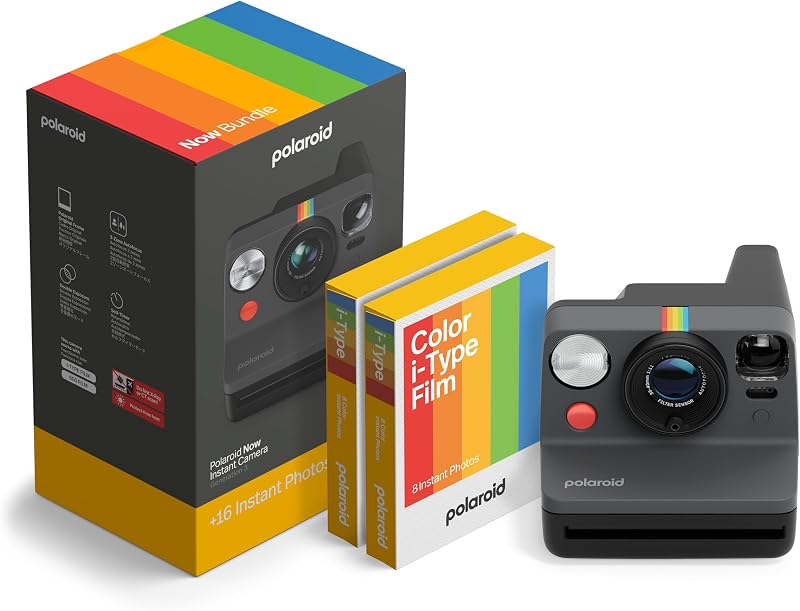
The Polaroid Now 3rd Generation I-Type Instant serves as the brand’s cornerstone analog camera for photographers who refuse to compromise on print scale. Designed to shoot both modern battery-free i-Type film and vintage 600 cartridges, this model preserves the full-sized, iconic square format while introducing refined internal hardware. Polaroid has engineered this third-generation release with an upgraded light meter position, a dedicated ranging sensor, and a twin-lens autofocusing system. The autofocus mechanism intelligently shifts between portrait and landscape focal zones without requiring manual intervention, allowing you to capture crisp, well-exposed physical imagery even in bright outdoor lighting conditions.
For studio vloggers, portrait artists, and visual journalers, the body provides crucial structural features that smaller cameras lack. The integrated tripod mount allows creators to lock off static shots for time-delayed portraits, staged group compositions, and precise double-exposure captures without introducing handheld camera shake. Additionally, the lens barrel supports creative photo filter attachments, opening up artistic color shifts and optical effects. The camera operates via automatic exposure control with a maximum shutter speed of 1/60 seconds and features an optical viewfinder for accurate subject framing. If you are curating an analog workflow alongside an old school polaroid camera, this generation modernizes the experience through internal USB-C charging, offering enough power reserve to shoot through more than 15 film packs per charge cycle.
The camera comes supplied in a bundle configuration that includes 16 color photos, letting you immediately start framing and producing physical prints. Its classic dimensions and physical heft provide a stable, balanced shooting experience in hand, though it naturally requires dedicated bag space when shooting on the move. When evaluated in a creative studio setup, its large physical print area offers rich analog contrast and unmistakable character that smaller portable formats simply cannot replicate.
- Twin-lens autofocusing system that automatically selects the appropriate lens for close or distant subjects
- Built-in tripod mount and photo filter compatibility for controlled studio environments
- Dual cartridge support for both modern i-Type film and classic Polaroid 600 film
- USB-C rechargeable internal battery delivering over 15 film packs of continuous operation
02 Polaroid Go Generation 2

Best for Mobile vloggers and street snapshot creators
Pros
- Enhanced lens for clearer framing
- Upgraded flash for low light
- Phone-case-ready mini print size
- Front-facing selfie mirror
Cons
- Only works with Go film
- No optical autofocus switching
Best for Everyday carry and mobile journalers
Pros
- Ultra-compact wearable design
- Built-in reflective selfie mirror
- Wide rolling shutter range
- Made with 30% recycled materials
Cons
- Incompatible with full-sized film
- Lacks tripod mounting thread
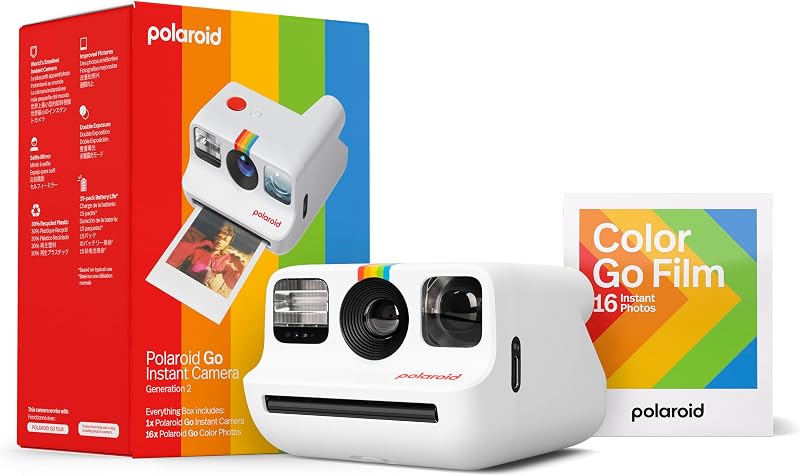
The Polaroid Go Generation 2 is engineered specifically for mobility, shrinking the instant analog photography experience down to an ultra-compact, wearable form factor. Designed to slide easily into small pockets, waist bags, or daily totes, this mini instant camera strips away excess bulk while retaining genuine chemical film processing. Built with 30% recycled materials, the Generation 2 model features key optical and sensor upgrades over the initial Go hardware, incorporating a wider aperture range, an upgraded light sensor, and calibrated exposure settings that produce brighter, more evenly balanced exposures in challenging ambient environments.
Despite its small profile, the camera packs considerable creative functionality for visual creators on the move. The optical viewfinder features a reflective exterior surface that doubles as a built-in selfie mirror, making it remarkably simple to frame solo portraits and two-person shots at arm’s length without cutting off faces. Creative photographers can also engage on-board double-exposure and self-timer modes directly from the camera controls. When moving through busy city streets or packing light for an outdoor event, securing the body with a sturdy poloroid camera strap ensures that the lightweight unit stays safe and accessible whenever spontaneous scenes unfold.
Technically, the hardware utilizes a rolling shutter capable of speeds between 1/300 of a second and 1 second, with minimum trigger intervals reaching 0.0001 seconds for responsive shooting. The camera is powered by an internal USB-C rechargeable battery that provides roughly 15 film packs of operation on a single charge cycle. It is bundled with 16 photos to get you started immediately. While it does not offer tripod mounting or compatibility with standard square film, its pocketable form factor and improved light meter make it an exceptionally capable companion for casual diary keeping and mobile photo walks.
- Ultra-compact wearable profile constructed using 30% recycled materials
- Reflective optical viewfinder functioning as an integrated selfie framing mirror
- Rolling shutter with dynamic speeds ranging from 1/300 to 1 second
- Internal USB-C rechargeable power cell rated for up to 15 film packs
03 Polaroid Go Generation 3 Bundle
The Polaroid Go Generation 3 Bundle refines the micro-analog format by optimizing optical clarity and illumination for creators who need quick, reliable handheld results. Measuring a mere 4.2 x 3.3 x 2.54 inches, this diminutive device functions as the best polaroid camera for vloggers and social media producers who want instantaneous, tactile mini-prints that fit neatly inside a smartphone case or cardholder wallet. The Generation 3 update introduces a fresh optical lens assembly engineered to minimize flare and deliver sharper close-up framing, while the upgraded built-in flash provides greater output to prevent dark, muddy exposures during indoor gatherings or evening social outings.
The camera features automatic exposure control, a front-facing selfie mirror, a built-in self-timer, and double-exposure capabilities. When assessing polaroid i-type vs polaroid go systems, it is essential to emphasize that this camera accepts only proprietary Polaroid Go film cartridges; it will not accept larger i-Type or 600 film packs. However, what it gives up in print surface area it recovers in pure operational agility. Because the chassis is so small and unobtrusive, subjects often respond more naturally to it than they would to a bulky vintage chassis or a large studio camera body.
Shipped as a complete set containing the camera body and 16 color photos, this bundle provides a ready-to-shoot package right out of the box. Vloggers documenting backstage moments, creator gatherings, or casual travel will appreciate how quickly the flash recycles and how effortlessly the miniature prints develop in the palm of your hand. It stands as Polaroid’s most nimble analog tool for high-tempo, grab-and-go documentation.
- Freshly updated optical lens designed for clearer close-up portraits and reduced glare
- High-output built-in flash engineered to deliver crisp exposures in dim indoor environments
- Pocket-sized 4.2 x 3.3 x 2.54-inch dimensions producing compact wallet-sized prints
- Complete bundled kit supplied with camera body and 16 color photos
What Sets These Models Apart
Choosing between these Polaroid models comes down to matching physical form factor and print dimensions against your personal shooting habits. The Polaroid Now line utilizes the full-sized square format that visual artists have relied on for generations, supporting advanced optical features such as two-lens autofocus switching and physical tripod threads. In contrast, the Go lineup trades frame area for mobility, employing miniature rolling shutters and wide apertures in a chassis that fits in the palm of your hand.
The following comparison table outlines the primary specifications and physical attributes across all three models to help clarify which configuration aligns with your photographic goals.
| Camera Model | Film Format Compatibility | Lens & Shutter System | Form Factor & Mounting | Power & Battery Life |
|---|---|---|---|---|
| Polaroid Now 3rd Generation I-Type Instant | Polaroid i-Type & Polaroid 600 | Twin-lens autofocus; 1/60s max shutter speed | Classic full-sized body; built-in tripod mount | USB-C rechargeable; 15+ film packs |
| Polaroid Go Generation 2 | Polaroid Go film only | Large aperture range; 1/300 to 1s rolling shutter | Ultra-compact mini body; 30% recycled materials | USB-C rechargeable; 15 film packs |
| Polaroid Go Generation 3 Bundle | Polaroid Go film only | Fresh lens assembly & upgraded built-in flash | Pocket-sized (4.2 x 3.3 x 2.54 in); no tripod mount | USB-C rechargeable; internal battery |
Buying Tips for Polaroid Instant Cameras
When planning to purchase an instant film setup, the long-term workflow is heavily influenced by the film format you choose. Full-sized i-Type and vintage 600 films provide expansive square images with distinct analog borders, making them ideal for gallery walls, physical scrapbooks, and formal studio work. However, miniature Go film packs are much smaller, which makes them easier to store in bulk while traveling and perfectly sized to slip behind clear phone cases or into wallet slots. For high-volume shooting, picking up a comprehensive polaroid camera and film bundle ensures you maintain a steady supply of fresh, properly stored chemistry so you never miss an unrepeatable visual moment.
Lighting awareness is equally vital when working with any analog chemical emulsion. Analog instant film possesses narrower exposure latitude than digital camera sensors, meaning that adequate ambient light or a dependable flash is essential for clear results. The Polaroid Now utilizes a twin-lens autofocus ranging sensor that evaluates distance to dial in sharp focus automatically, making it well-suited for varied distances. In contrast, the Go series utilizes a wide-aperture optical system with an integrated flash engineered primarily for arm’s-length portraits and snapshot street photography. If aesthetic customization matters to your branding, Polaroid also produces its hardware in an array of finishes, ranging from clean monochromes to eye-catching options like a vibrant blue polaroid camera.
Finally, consider how the physical camera integrates into your shooting environment. If your content production involves stationary studio desks, time-lapse sequences, or double-exposure compositions where exact alignment is critical, the full-sized Polaroid Now with its integrated tripod threading is the practical selection. Conversely, if you prioritize street documentation, casual event vlogging, or music festival snapshots where heavy equipment becomes a burden, the pocketable footprint of the Polaroid Go series ensures that your instant camera stays with you all day long.
FAQ
What is the main difference in the polaroid i-type vs polaroid go debate?
The primary difference lies in the physical size of the camera body and the resulting film prints. Polaroid i-Type cameras produce the classic full-sized square instant photos that visual artists traditionally associate with the brand. Polaroid Go cameras are scaled down into a pocketable footprint that produces miniature prints roughly the size of a credit card, tailored for casual travel and wallet keepsakes.
Can the Polaroid Now Generation 3 use vintage 600 film packs?
Yes, the Polaroid Now Generation 3 is fully compatible with both modern battery-free i-Type film and vintage Polaroid 600 film. Because the camera contains its own internal USB-C rechargeable battery, it can expose 600 film cartridges without relying on the built-in battery typically found inside vintage 600 film packs.
Why is the Polaroid Go considered a top pocket instant camera for vloggers?
The Polaroid Go series is exceptionally well suited for vloggers due to its miniature dimensions, lightweight build, and integrated selfie mirror on the viewfinder. The Generation 3 model also incorporates a fresh optical lens and a stronger flash, allowing content creators to capture crisp handheld selfies and behind-the-scenes snapshots without carrying extra bags.
How long does the battery last on these Polaroid cameras?
Both the Polaroid Now 3rd Generation and the Polaroid Go series feature internal lithium-ion batteries recharged via modern USB-C ports. According to the manufacturer listings, a full battery charge provides enough operational power to shoot through roughly 15 or more complete film packs before needing to be plugged in again.
Can I use Polaroid Go film inside a Polaroid Now camera?
No, Polaroid film types are not cross-compatible between different camera formats. The Polaroid Go camera is designed exclusively to feed and develop miniature Polaroid Go film cartridges, while the full-sized Polaroid Now requires either standard i-Type film or classic 600 film. Inserting the wrong cartridge type will damage the film pack or the camera’s internal rollers.


