Toshiba TV & Streaming
Toshiba 50-Inch TV Lineup: Choosing the Right Display for Your Workflow
Selecting a dependable display for video playback, timeline reviews, and secondary studio media monitoring requires balancing screen size, backlighting technology, and panel responsiveness. A toshiba 50 inch tv occupies a practical sweet spot for many creative workspaces, offering expansive visual real estate without dominating a compact editing desk or client staging area. For content creators,…
As Amazon Associates, we earn from qualifying purchases. This means we may receive a small commission at no extra cost to you if you click through and make a purchase.
Selecting a dependable display for video playback, timeline reviews, and secondary studio media monitoring requires balancing screen size, backlighting technology, and panel responsiveness. A toshiba 50 inch tv occupies a practical sweet spot for many creative workspaces, offering expansive visual real estate without dominating a compact editing desk or client staging area. For content creators, vloggers, and multimedia editors, choosing a toshiba 50 inch 4k tv means examining how image processing algorithms handle shadow details, color grading nuances, and motion cadence during long production sessions.
This guide analyzes four specific models from the Toshiba lineup to clarify which display matches your production environment. We cover the core toshiba 50 inch smart tv model alongside closely related 43-inch and 55-inch options from the same manufacturer, explaining how they diverge across backlight engineering, refresh capabilities, and acoustic hardware. Whether you need an agile secondary screen to verify client footage or an advanced mini-LED display for high-framerate playback, this toshiba 50 inch tv comparison breaks down the exact specifications to help you decide which toshiba tv to buy.
Which Toshiba 50-inch TVs Should You Buy
All 4 models on this page, side by side
| Model | Buyer rating | Ratings | Listing |
|---|---|---|---|
01 TOSHIBA 50" Class M450 Series QLED TOSHIBA 50" Class M450 Series QLED |
Price | ||
02 TOSHIBA 43" Class C350 Series LED TOSHIBA 43" Class C350 Series LED |
Price | ||
| 03TOSHIBA 43" Class M450 Series QLED |
Price | ||
04 Toshiba 55" Z670R Series Mini-LED 4K Toshiba 55" Z670R Series Mini-LED 4K |
137 | Price |
Prices and ratings are read from the Amazon product listing and change there, not here. Every rating is the average left by Amazon buyers, not a score from this site.
Why each one is on the list
- For creators who need balanced 4K color reproduction and dedicated AirPlay client sharing at the primary 50-inch display size: TOSHIBA 50″ Class M450 Series QLED.
- For budget-conscious video editors seeking a compact secondary monitor with advanced 4K upscaling for archival footage: TOSHIBA 43″ Class C350 Series LED.
- For tight desktop editing workstations that demand rich quantum-dot color grading in a space-saving 43-inch chassis: TOSHIBA 43″ Class M450 Series QLED.
- For professional filmmakers and high-framerate action editors requiring true 144Hz playback, local dimming, and dedicated bass monitoring: Toshiba 55″ Z670R Series Mini-LED 4K.
01 TOSHIBA 50″ Class M450 Series QLED

Best for Studio video monitoring and color checking
Pros
- Quantum Dot color panel
- HDR10+ Adaptive and Dolby Vision
- Built-in Apple AirPlay
Cons
- Limited to 60Hz refresh rate
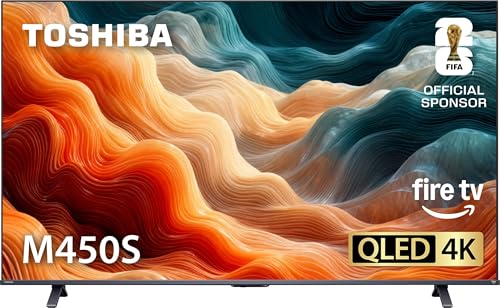
The TOSHIBA 50″ Class M450 Series QLED serves as the centerpiece of this evaluation, delivering an actual 49.5-inch diagonal panel that fits easily onto standard studio stands or wall mounts. Built around quantum dot engineering, this toshiba m450 series qled television provides enriched color saturation that allows video editors to inspect grading palettes and highlight roll-offs with elevated accuracy. Powering the picture processing is the REGZA AI Engine ZRi Gen3, fine-tuned by display specialists to balance scene dynamics and acoustic elements in real time.
In studio operations, connectivity and dynamic range handling make a tangible difference. This toshiba fire tv 50 inch unit includes HDR10+ Adaptive and Dolby Vision HDR imaging, which continuously optimize scene-by-scene brightness levels against ambient studio lighting. While cutting project footage stored on a toshiba external hard drive, creators can push reference clips to the screen effortlessly thanks to built-in Apple AirPlay support and three dedicated HDMI inputs. Game Mode functionality adds Auto Low Latency Mode (ALLM) and Variable Refresh Rate (VRR), ensuring clean motion without screen tearing during interactive media development.
Audio monitoring is reinforced by Toshiba’s REGZA Power Audio system, which utilizes dual clear direct speakers to deliver clean vocal reproduction and realistic sound distribution. Measuring 2.8 inches deep and 43.7 inches wide, this display integrates cleanly into medium-sized creative spaces without crowding secondary equipment. It operates at a steady 60Hz refresh rate, which provides reliable playback for standard 24fps cinema and 30fps/60fps video timelines, though editors working extensively with high-speed 120fps footage will eventually look toward higher-tier high-refresh models.
- REGZA AI Engine ZRi Gen3 with REGZA QLED Color technology
- Dolby Vision, HDR10+ Adaptive, and Dolby Atmos audio support
- Built-in Apple AirPlay and three HDMI ports for studio input flexibility
- Game Mode with Auto Low Latency Mode, Variable Refresh Rate, and eARC
02 TOSHIBA 43″ Class C350 Series LED
Best for Small editing desks wanting QLED accuracy
Pros
- Vibrant REGZA QLED Color
- REGZA Power Audio direct speakers
- HDR10+ Adaptive dynamic range
Cons
- Standard 60Hz display refresh
Best for Compact suites needing intelligent 4K upscaling
Pros
- Intelligent AI 4K Upscaler
- Super Contrast Booster
- Motion Rate 120 blur reduction
Cons
- Standard LED without quantum dots
- 60Hz refresh rate ceiling
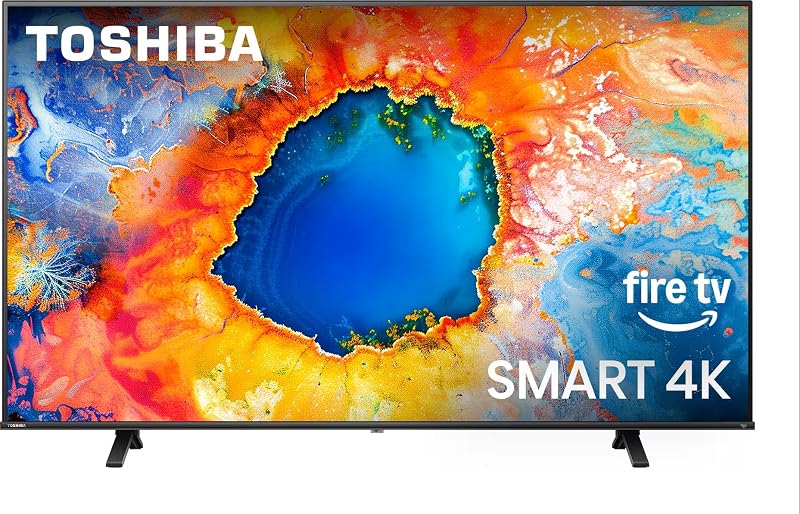
For hobbyists and vloggers operating in tighter studio environments, the TOSHIBA 43″ Class C350 Series LED offers a dedicated 43-inch display footprint that slips neatly onto crowded production desks. Driven by the standard REGZA Engine ZR, this toshiba c350 series led television focuses on dependable clarity and essential 4K playback. Unlike standard utility panels, it features a specialized AI 4K Upscaler that intelligently evaluates neighboring pixels to reconstruct fine textures and color transitions, making legacy 1080p camera b-roll look crisp and cohesive on a modern timeline.
Visual contrast receives a boost through Toshiba’s Super Contrast Booster technology, which works in tandem with broad high dynamic range support including Dolby Vision, HDR10 Plus, and HLG. When setting up a multi-display edit suite alongside a dedicated msi white monitor, this display functions reliably as a fullscreen playback monitor for client viewing. Motion handling is governed by Ultimate Motion and Motion Rate 120 processing, minimizing blur during rapid camera pans or fast-action sequences.
This model also integrates dedicated Sports Mode algorithms to track fast-moving elements with heightened clarity, alongside a Game Mode that incorporates ALLM, VRR, and eARC support. The Fire TV interface keeps streaming platforms and live channel feeds organized without unnecessary menu lag. Because it utilizes a traditional LED backlight without quantum dots and remains locked at a 60Hz native refresh rate, it gives way to the M450 series when wide color gamut coverage and deeper dynamic saturation are required for serious color grading.
- REGZA Engine ZR with intelligent AI 4K Upscaler for legacy media
- Super Contrast Booster with Dolby Vision, HDR10 Plus, and HLG formatting
- Ultimate Motion and Motion Rate 120 blur reduction processing
- Integrated Game Mode and specialized Sports Mode algorithms
03 TOSHIBA 43″ Class M450 Series QLED
The TOSHIBA 43″ Class M450 Series QLED bridges the gap between compact physical dimensions and elevated panel performance. Featuring an active 42.5-inch screen size, this display packages the sophisticated REGZA AI Engine ZRi Gen3 and quantum dot color reproduction into a chassis measuring just 3.1 inches deep and 37.9 inches wide. For desk-bound creators who find a 50-inch panel overwhelming at close viewing distances, this model provides identical color saturation and tonal gradation to its larger sibling while preserving valuable workspace.
Color precision is a critical consideration for digital content workflows, and this toshiba regza 4k tv implements AI 4K Clarity and HDR10+ Adaptive processing to preserve nuanced highlight details regardless of ambient room glare. When importing large raw rendering files or cataloging archived sequences from a toshiba 4tb external hard drive, creators can inspect clips with confident tonal separation. The display supports both Dolby Vision and Dolby Atmos, creating an immersive acoustic and visual environment right from the dual clear direct speakers of the REGZA Power Audio system.
Interactive response times remain snappy due to the onboard Game Mode, which provides ALLM, VRR, and eARC passthrough for modern consoles and PC video outputs. Alexa voice control via the Press & Ask remote makes it easy to set production timers, adjust volume, or switch inputs hands-free while your hands remain on your editing deck. However, like the 50-inch variant, this panel maxes out at a 60Hz refresh rate, meaning creators requiring high-framerate 120Hz or 144Hz video verification will need to step up to the Z670R series.
- REGZA AI Engine ZRi Gen3 paired with REGZA QLED Color technology
- Dolby Vision, HDR10+ Adaptive, and AI 4K Clarity image refinement
- REGZA Power Audio with dual clear direct speaker configuration
- Integrated Fire TV with Press & Ask Alexa voice remote control
04 Toshiba 55″ Z670R Series Mini-LED 4K

Best for High-framerate video reviews and grading
Pros
- Mini-LED with Full Array Local Dimming
- Native 144Hz refresh rate with FreeSync
- REGZA Bass Woofer audio system
- Total HDR Solution Pro support
Cons
- Larger 55-inch footprint for tight desks
Stepping up in both scale and technical sophistication, the Toshiba 55″ Z670R Series Mini-LED 4K is engineered for production environments where uncompromising contrast and high framerate precision are essential. Moving beyond standard backlights, this toshiba z670r mini-led screen employs Mini LED with Full Array Local Dimming. This dense clustering of microscopic light-emitting diodes allows the REGZA Engine ZRi Gen3 to control deep shadows and radiant highlights independently, eliminating backlighting bleed across complex cinematic scenes.
For creators editing high-speed sports, commercial drone sequences, or 120fps video streams, the native 144Hz panel refresh rate is a massive technical upgrade. Supported by Game Mode Pro, VRR 144Hz, ALLM, and AMD FreeSync Premium, the display guarantees tear-free motion whether connected to a top-tier editing workstation or a next-generation console. The Total HDR Solution Pro platform covers Dolby Vision IQ, HDR10+, HDR10+ Adaptive, and HLG, adjusting brightness according to ambient studio sensors to guarantee accurate dynamic range rendering.
Sound quality also reaches a studio-grade benchmark with the inclusion of REGZA Power Audio Pro with Bass Woofer. Unlike standard low-profile television speakers, this system utilizes meticulously tuned amplifiers, dual clear direct speakers, and a dedicated REGZA Bass Woofer to deliver resonant low-end frequencies that allow creators to gauge audio mixes without immediate reliance on external reference monitors. While its 55-inch frame requires more physical clearance than a 50-inch panel, its 3000:1 contrast ratio, quantum dot wide color gamut, and 144Hz panel make it the definitive choice for demanding visual creators.
- Mini LED backlight with Full Array Local Dimming and 3000:1 contrast ratio
- Native 144Hz refresh rate with AMD FreeSync Premium and Game Mode Pro
- REGZA Power Audio Pro featuring an integrated REGZA Bass Woofer
- Total HDR Solution Pro supporting Dolby Vision IQ and HDR10+ Adaptive
What Sets These Models Apart
Comparing these four displays highlights the architectural trade-offs between standard edge lighting, quantum dot film integration, and multi-zone mini-LED array engineering. The following breakdown shows how processing power, refresh ceilings, and integrated audio configurations differ across the lineup.
| Model | Display Tech & Backlight | Refresh Rate | Audio Architecture | Key HDR Standards |
|---|---|---|---|---|
| TOSHIBA 50″ Class M450 Series QLED | QLED (LED Backlight) | 60Hz | REGZA Power Audio (Clear Direct Speakers) | Dolby Vision, HDR10+ Adaptive |
| TOSHIBA 43″ Class C350 Series LED | LED 4K UHD | 60Hz (Motion Rate 120) | Dolby Atmos Integration | Dolby Vision, HDR10+, HLG |
| TOSHIBA 43″ Class M450 Series QLED | QLED (LED Backlight) | 60Hz (Ultimate Motion) | REGZA Power Audio (Clear Direct Speakers) | Dolby Vision, HDR10+ Adaptive |
| Toshiba 55″ Z670R Series Mini-LED 4K | Mini-LED with Full Array Local Dimming | 144Hz Native | REGZA Power Audio Pro with Bass Woofer | Dolby Vision IQ, HDR10+, HDR10+ Adaptive, HLG |
While the C350 series provides foundational 4K playback through reliable LED illumination, the M450 series steps up significantly in color reproduction thanks to its quantum dot layer. Meanwhile, the Z670R outpaces the others in pure motion handling and black-level precision through its 144Hz refresh rate and local dimming matrix.
Buying Tips for Toshiba 50-inch TVs
When selecting a television for creative studio monitoring, matching viewing distance to screen dimensions is critical. A 50-inch display class fits naturally into mid-sized rooms where your seating position sits approximately four to seven feet from the panel. At this range, 4K resolution resolves without visible pixelation, allowing you to catch minor color banding or focus errors in timeline playback. If your edit suite requires desk mounting within three feet of your primary workstation, stepping down to a 43-inch chassis prevents excessive eye fatigue, whereas wall-mounted client staging setups often benefit from the broader viewing angles and scale of a 55-inch unit.
Panel illumination and color technology dictate how faithfully your content will translate to external audiences. If your projects involve standard dynamic range web delivery, the entry-level LED backlighting on the C350 series provides sufficient illumination with predictable rendering. However, if your work requires wide color gamut mastering, HDR10+ compliance, or refined highlight control, quantum dot filtering on the M450 series or the precision local dimming of the Z670R series Mini-LED will prevent blown-out specular highlights and crushed shadow gradations.
Input flexibility and refresh rates must also match your source hardware. Editors cutting standard 24fps cinema or standard 30fps and 60fps vlogs will find that a 60Hz panel with Variable Refresh Rate and Auto Low Latency Mode handles timeline scrub smoothly. If you produce high-framerate gaming streams, 120fps slow-motion captures, or interactive 3D media, investing in a native 144Hz display with AMD FreeSync Premium eliminates frame pacing stutter entirely. Make sure your graphics card or media player supports HDMI eARC and high-bandwidth output to fully exploit these display capabilities.
FAQ
Does the Toshiba 50-inch M450 Series support Apple AirPlay for studio workflow?
Yes, the listing for the TOSHIBA 50″ Class M450 Series QLED explicitly specifies Apple AirPlay compatibility. This allows creators using Mac workstations, iPads, or iPhones to stream video edits, rough cuts, and presentation decks wirelessly to the display without needing external streaming hardware.
What is the difference between REGZA Engine ZR and REGZA AI Engine ZRi Gen3?
The standard REGZA Engine ZR found on the C350 series focuses on core 4K processing, contrast optimization, and intelligent AI 4K upscaling for lower-resolution content. The REGZA AI Engine ZRi Gen3, implemented on the M450 and Z670R series, is a newer generation processor fine-tuned by display experts to continuously adjust scene dynamics, tonal gradation, and acoustic synchronization using deeper machine-learning models.
Can Toshiba Fire TV models be used as secondary PC monitors for video editing?
Yes, all four models include standard HDMI ports and Game Mode features such as Auto Low Latency Mode (ALLM) and Variable Refresh Rate (VRR). When connected via HDMI to a computer workstation, they function as secondary displays, allowing creators to view full-screen playback windows and timeline monitors while working inside editing software.
Why does the Toshiba Z670R offer a 144Hz refresh rate while the M450 offers 60Hz?
The Toshiba 55″ Z670R is built with a high-performance panel engineered for competitive gaming and high-speed motion, featuring a native 144Hz refresh rate and AMD FreeSync Premium. The M450 and C350 series are built around standard 60Hz panels, which handle traditional broadcast video, movies, and standard computer feeds perfectly but cannot display framerates beyond 60 frames per second.
What audio features are built into Toshiba REGZA Power Audio systems?
The M450 series incorporates REGZA Power Audio with dual clear direct speakers designed to deliver balanced acoustic imaging and focused vocal clarity. The premium Z670R expands on this with REGZA Power Audio Pro, adding a built-in REGZA Bass Woofer and tuned amplifiers for extended low-frequency performance without requiring external soundbars.


