Klipsch Audio & Headphones
Building a Klipsch 7.1 Surround System: Top Bundles and Add-On Speakers Compared
Configuring a dedicated multi-channel playback room requires balancing clean acoustic directivity, sufficient amplification, and room boundary reflections. Creators producing spatial audio, video editors mastering surround tracks, and home cinema enthusiasts seeking deep immersion frequently look to high-efficiency horn transducers to capture sharp micro-dynamics. Selecting the right setup comes down to choosing between an integrated turnkey…

As Amazon Associates, we earn from qualifying purchases. This means we may receive a small commission at no extra cost to you if you click through and make a purchase.
Configuring a dedicated multi-channel playback room requires balancing clean acoustic directivity, sufficient amplification, and room boundary reflections. Creators producing spatial audio, video editors mastering surround tracks, and home cinema enthusiasts seeking deep immersion frequently look to high-efficiency horn transducers to capture sharp micro-dynamics. Selecting the right setup comes down to choosing between an integrated turnkey package that includes matched amplification or assembling modular components to achieve an optimal klipsch 7.1 surround sound setup tailored to your specific workspace dimensions.
This comprehensive klipsch home theater comparison evaluates exactly six distinct hardware offerings from the brand. These options range from complete 5.2 system packages that supply floorstanding towers, dual subwoofers, and processing hardware, to standalone elevation pairs and dedicated surround monitors. By analyzing the fundamental architectural differences among these packages and individual additions, you can determine exactly which components will anchor your multi-channel listening environment.
Which Klipsch Surround Sound Speakers Should You Buy
All 6 models on this page, side by side



Prices and ratings are read from the Amazon product listing and change there, not here. Every rating is the average left by Amazon buyers, not a score from this site.
Why each one is on the list
- Turnkey amplification with dual subwoofers: Choose Klipsch Reference 5.2 Home Theater System for an all-in-one package that includes a 9.2-channel network AV receiver.
- Passive core monitoring with single sub: Choose Klipsch Reference 5.1 Dolby Atmos Home if you already own amplification and need a matched five-speaker foundation with one 12-inch subwoofer.
- High-efficiency tracking with dual subs: Choose Klipsch Reference 5.2 Home Theater to maximize acoustic output with 97dB sensitive front towers and twin powered low-frequency modules.
- Modular height or surround channel expansion: Choose Klipsch RP-500SA Reference Premiere Dolby Atmos to add switchable upward-firing Atmos or direct-radiating wall-mounted height audio.
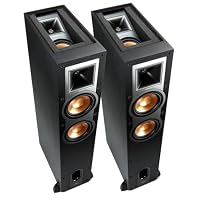
- Custom front soundstage anchoring: Choose Klipsch Reference R-26FA Floorstanding Speaker to establish powerful front mains equipped with built-in upward-firing Atmos drivers.
- Encompassing side and rear dispersion: Choose Klipsch RP-502S Reference Premiere Surround Speakers to eliminate audio hot spots across wide seating areas or multi-seat edit consoles.
01 Klipsch Reference 5.2 Home Theater System

Best for High-sensitivity dual-subwoofer tracking suites
Pros
- High 97dB sensitivity rating
- Dual R-12SW subwoofers for balanced bass
- Bi-amp capable front main binding posts
Cons
- External receiver amplification required
- Substantial physical room space demanded

Best for Editors seeking complete bundled AVR amplification
Pros
- Includes Onkyo 9.2-channel 8K receiver
- Dual 12-inch 400W powered subwoofers
- Built-in up-firing front elevation channels
Cons
- Large floor footprint requiring ample room
- Twin subwoofers require dual dedicated outlets
The Klipsch Reference 5.2 Home Theater System functions as an exhaustive, all-in-one hardware foundation designed to eliminate component guesswork. The package combines two R-625FA floorstanding speakers, an R-52C center channel, a pair of R-41M bookshelf speakers, two R-12SW powered subwoofers, and an Onkyo TX-NR7100 9.2-channel network AV receiver. Finished in black wood grain vinyl, the front tower enclosures incorporate upward-firing height channels directly into their top baffles. The supplied Onkyo receiver handles central switching, network audio streaming, and high-resolution video pass-through via its 8K and 4K platform, pushing up to 220W per channel at 6 ohms.
For video creators and sound editors designing a multi-seat production bay, this bundle solves both bass node distribution and amplification routing in a single move. Distributing low frequencies through dual 12-inch subwoofers, each backed by a 400W all-digital amplifier, smooths room acoustic modes significantly better than a single enclosure. Because the Onkyo platform supports 9.2 processing channels, users can run the primary 5.2 layout alongside the integrated front height elevation channels immediately, with open assignable channels left for rear surround expansion to construct a complete physical array of klipsch in wall speaker hardware or passive add-on monitors.
- All-in-one package with two R-625FA towers, R-52C center, R-41M bookshelf pair, and twin R-12SW subs
- Supplied Onkyo TX-NR7100 9.2-channel network AV receiver with 8K and 4K capability
- Dual 12-inch powered subwoofers utilizing 400W all-digital amplification configurations
- Front floorstanding towers featuring integrated upward-firing height drivers
This system gives way to simpler configurations if you already own dedicated multichannel power amplifiers or an existing modern receiver, as paying for the integrated TX-NR7100 would result in redundant processing hardware.
02 Klipsch Reference 5.1 Dolby Atmos Home

Best for Workstations with existing multi-channel AVR power
Pros
- Integrated Dolby Atmos front towers
- Single 12-inch 400W peak subwoofer
- Signature Tractrix LTS aluminum tweeters
Cons
- Requires external multi-channel receiver
- Single subwoofer offers less modal coverage
The Klipsch Reference 5.1 Dolby Atmos Home delivers a dedicated acoustic package tailored for setups that already possess amplification. Anchoring the system are two R-625FA floorstanding towers that integrate built-in upward-firing elevation channels. Dialogue duties are managed by an R-52C center speaker, while a pair of R-41M bookshelf monitors cover surround responsibilities. Low-frequency energy down to the sub-bass register is handled by a single R-12SW 12-inch powered subwoofer featuring an internal 400W peak all-digital amplifier, all encased in reinforced MDF finished in scratch-resistant black textured wood grain.
This setup is engineered around signature Klipsch acoustic technologies, employing 90×90 Tractrix horn profiles paired with Linear Travel Suspension (LTS) aluminum tweeters and spun copper Injection Molded Graphite (IMG) woofers. For media professionals mixing video content, horn loading ensures high efficiency and tight pattern control, minimizing reflections off editing consoles and side walls. The inclusion of magnetic grilles and a 5-year limited warranty provides long-term cabinet durability for busy production suites. Creators stepping up from basic desktop monitors gain clear vocal clarity and expansive dynamic range without needing to mount speakers into their ceiling drywall.
- Two R-625FA floorstanding towers with built-in upward-firing Dolby Atmos channels
- Dedicated R-52C center channel paired with compact R-41M surround bookshelf speakers
- Single R-12SW 12-inch powered subwoofer with a 400W peak digital amplifier
- Acoustic platform utilizing Tractrix horn geometry and spun copper IMG woofers
While this configuration excels in medium-sized editing suites, operators looking to manage complex acoustic room modes across multiple studio seats will find the dual-subwoofer packs provide better low-frequency uniformity.
03 Klipsch Reference 5.2 Home Theater
The Klipsch Reference 5.2 Home Theater is a high-output passive speaker ensemble designed around two R-26FA floorstanding towers, an R-52C center speaker, two R-41M bookshelf speakers, and two R-12SW powered subwoofers. Boasting a high sensitivity rating of 97dB and a wide frequency response extending from 38Hz up to 24kHz, this system produces massive dynamic peaks with minimal amplifier strain. The front R-26FA towers feature dual binding posts for their main speaker channels, enabling bi-wire or bi-amp operation, alongside dedicated single binding posts that route signal to the integrated top elevation drivers.
This layout caters specifically to creators and hobbyists working in larger spaces where audio headroom is critical. With main channel power handling rated at 100W continuous and 400W peak, complemented by height channel ratings of 75W continuous and 150W peak, the array effortlessly reproduces dynamic film transients and percussive sound effects. Deploying two 12-inch R-12SW subwoofers allows users to place bass modules in opposing room corners, canceling out acoustic nulls and smoothing out low-end monitoring accuracy across the mix position.
- Dual R-26FA floorstanding towers with built-in elevation channels and 97dB sensitivity
- Twin R-12SW 12-inch powered subwoofers producing balanced low-frequency energy
- Dual binding posts on main channels supporting bi-wire and bi-amp signal pathways
- Nominal 8-ohm impedance for broad compatibility across modern AV receiver models
The system gives way to modular bookshelf configurations when working in tight, space-constrained edit bays where large floorstanding towers cannot be spaced adequately away from room boundaries.
04 Klipsch RP-500SA Reference Premiere Dolby Atmos

Best for Modular expansion of height and side channels
Pros
- Switchable crossover for Atmos or surround
- Titanium LTS vented tweeters
- Keyhole mounting for wall elevation
Cons
- Compact enclosure limits lower-octave response
- Requires dedicated height amplification channels
The Klipsch RP-500SA Reference Premiere Dolby Atmos is an acoustically versatile speaker pair that belongs to the elevated Reference Premiere product tier. Each cabinet houses a 1-inch titanium LTS vented tweeter seated within a hybrid Tractrix horn, coupled to a 5.25-inch spun copper Cerametallic woofer. Rated for 75.0 watts of output power and dressed in a scratch-resistant ebony finish, the RP-500SA includes an integrated switchable crossover on its terminal cup that toggles the internal circuitry between upward-firing Dolby Atmos operation and direct-radiating surround sound.
For sound editors seeking modular flexibility, these speakers can sit directly atop existing front or rear towers to bounce height cues off flat plaster ceilings, or they can be wall-mounted using their integrated keyhole brackets as direct-firing elevation or side surrounds. The vented tweeter housing mitigates back-pressure standing waves behind the titanium diaphragm, providing smoother high-frequency detail than standard aluminum assemblies. This transparency makes them exceptional tools for tracking spatial panning effects in post-production workflows.
- Switchable crossover setting supporting either Dolby Atmos elevation or standard surround mode
- 1-inch titanium LTS vented tweeter mounted in an advanced hybrid Tractrix horn
- 5.25-inch spun copper Cerametallic woofer providing high rigidity and low distortion
- Integrated keyhole mounting system for secure on-wall height or surround deployment
While the RP-500SA delivers unmatched versatility for adding extra spatial channels, it relies on an external receiver with free assignable height terminals and requires an existing multi-channel base system to be fully effective.
05 Klipsch Reference R-26FA Floorstanding Speaker
Best for Custom front soundstage building with elevation
Pros
- Dual 6.5-inch IMG woofers with front port
- Integrated upward-firing Atmos channels
- Dual binding posts for bi-wiring
Cons
- Sold strictly as stereo front pair
- Requires four speaker wire runs
The Klipsch Reference R-26FA Floorstanding Speaker comes as a dedicated pair of front floorstanding towers engineered with built-in upward-firing Atmos channels. The front main driver array consists of a 1-inch aluminum diaphragm compression driver mated to a 90×90 square Tractrix horn, paired with dual 6.5-inch copper-spun IMG woofers tuned through a front-firing port. The cabinet incorporates separate speaker terminals for the main front stage and the integrated top-mounted height driver, allowing users to bi-wire or bi-amp the primary channels while maintaining distinct spatial elevation routing.
For vloggers and audio creators assembling a custom multi-channel space piece by piece, starting with the R-26FA establishes an authoritative stereo front image with deep low-end punch. The front-firing port design ensures that low frequencies exit away from rear boundaries, granting extra installation flexibility near studio walls or editing backdrops. Continuous power handling of 100W with 400W peak capacity ensures these towers handle loud creative sound design sessions without thermal compression or clipping distortion.
- Integrated elevation channels for three-dimensional sound reproduction
- Dual 6.5-inch copper-spun IMG woofers combined with a front-firing bass port
- 1-inch aluminum compression driver with 90×90 Tractrix horn geometry
- Dual binding post terminal cups enabling bi-wire and bi-amp electrical connections
These floorstanding towers give way to compact bookshelf monitors when floor area is at an absolute premium, or when an editor relies entirely on nearfield desk placement.
06 Klipsch RP-502S Reference Premiere Surround Speakers
Best for Wide-dispersion side and rear channel coverage
Pros
- Wide Dispersion Surround Technology
- Dual titanium tweeters with silicon horns
- Dual 5.25-inch Cerametallic woofers
Cons
- Diffuse dispersion reduces pinpoint nearfield localization
- Heavy cabinet construction requires secure anchors
The Klipsch RP-502S Reference Premiere Surround Speakers utilize specialized acoustic geometry to envelop the rear and side axes of a studio or theater space. Incorporating proprietary Wide Dispersion Surround Technology (WDST), each speaker deploys dual 1-inch vented titanium LTS tweeters housed in compressed molded silicon 90×90 Tractrix horns, alongside dual 5.25-inch Cerametallic woofers. The drivers are housed in a sturdy cabinet featuring satin-painted baffles, flexible magnetic grilles, and a scratch-resistant ebony finish.
In a standard multi-speaker layout, direct-radiating bookshelf monitors can beam audio directly into an editor’s ear, making panning sound unnaturally sharp and localized. The RP-502S circumvents this with its splayed dual-driver architecture, splashing ambient sound across a wider field. This broad dispersion ensures that sound effects, atmospheric background noise, and reverberant room tails sound continuous across the entire monitoring zone. While checking master audio mixes against consumer gear like jbl speakers bluetooth wireless units tests basic monophonic translation, the RP-502S provides the diffuse cinematic immersion required to verify true theatrical surround performance.
- Proprietary Wide Dispersion Surround Technology for expansive multi-angle coverage
- Dual 1-inch titanium LTS vented tweeters featuring molded silicon Tractrix horn faces
- Dual 5.25-inch Cerametallic woofers with stamped-steel baskets and dual-layer voice coils
- Computer-modeled phase plugs designed to maintain smooth, non-resonant frequency response
Because the RP-502S produces a deliberately diffuse soundfield, mixing engineers who require pinpoint, razor-sharp point-source localization for precise object-based panning might prefer traditional direct-radiating bookshelf speakers like the R-41M.
What Sets These Models Apart
Understanding the hardware relationships across these six options makes planning an upgrade path far more manageable. Complete multi-channel bundles bundle matched voice-timbered speakers alongside subwoofers, whereas individual pairs let you expand height channels or rear soundstage boundaries as your workflow demands. The table below outlines how these models differ in system role, acoustic driver configuration, and power requirements.
| Model | System Role | Transducer Configuration | Amplification & Connectivity |
|---|---|---|---|
| Klipsch Reference 5.2 Home Theater System | Complete Turnkey Bundle with Receiver | R-625FA Towers, R-52C Center, R-41M Bookshelves, 2x 12-inch Subs | Included Onkyo 9.2-ch AVR (220W/ch @ 6 ohms); Dual 400W Powered Subs |
| Klipsch Reference 5.1 Dolby Atmos Home | Complete Passive Speaker & Sub Pack | R-625FA Towers with Heights, R-52C Center, R-41M Bookshelves, 1x 12-inch Sub | External AVR Required; Single 400W Peak Powered Subwoofer |
| Klipsch Reference 5.2 Home Theater | High-Output Dual-Subwoofer Speaker Pack | R-26FA Towers with Heights, R-52C Center, R-41M Bookshelves, 2x 12-inch Subs | External AVR Required; Dual 400W Powered Subs; Bi-Amp Front Terminals |
| Klipsch RP-500SA Reference Premiere Dolby Atmos | Add-On Elevation / Surround Pair | 1-inch Titanium LTS Tweeter, 5.25-inch Cerametallic Woofer | Passive (75W Power Rating); Switchable Atmos/Surround Crossover |
| Klipsch Reference R-26FA Floorstanding Speaker | Standalone Front Soundstage Pair | Dual 6.5-inch IMG Woofers, 1-inch Aluminum Tweeter, Top Height Array | Passive (100W Continuous / 400W Peak); Dual Binding Posts |
| Klipsch RP-502S Reference Premiere Surround Speakers | Dedicated Ambient Surround Pair | Dual 1-inch Titanium Tweeters, Dual 5.25-inch Cerametallic Woofers (WDST) | Passive; Requires Receiver Surround Channels |
Buying Tips for Klipsch Surround Sound Speakers
When selecting among these setups, carefully assess your available physical room dimensions and receiver capabilities. Floorstanding towers such as the R-625FA and R-26FA deliver full-range dynamics, but their cabinet depth demands clearance from back walls to avoid boomy low-end resonance. For creative professionals working in hybrid spaces where physical floor standing room is limited, evaluating wall boundaries or even a secondary check on portable hardware like a philips bluetooth speaker highlights the sheer acoustic authority that dedicated wooden cabinet enclosures bring to a room.
Channel routing is equally crucial when expanding toward a full 7.1 layout. The integrated elevation speakers found on the R-625FA and R-26FA utilize separate binding posts on their rear terminal cups. These drivers are not wired into the main front channel circuit; they require discrete amplifier channels assigned to Dolby Atmos or height duties. If your AV receiver only provides seven channels of total amplification, running a 5.1 layout with front height elevation utilizes all seven channels, leaving no available power to drive physical rear surround speakers without expanding to a 9-channel receiver platform.
Acoustic matching between standard Reference and Reference Premiere components is another factor to keep in mind. Standard Reference models utilize aluminum LTS tweeters and spun copper IMG woofers, while Reference Premiere units step up to vented titanium tweeters with silicon-damped horns and rigid Cerametallic drivers. While Klipsch horn directivity characteristics remain harmonious across both series, placing higher-grade Reference Premiere speakers like the RP-500SA or RP-502S in surround or height positions injects exceptional clarity into micro-transients and subtle ambient room cues.
FAQ
How do you wire the elevation channels on Klipsch floorstanding towers?
The R-625FA and R-26FA floorstanding towers feature two independent sets of binding posts on their rear terminal cups. One set is labeled for the main front channel audio, while the second set connects internally to the upward-firing top elevation drivers. To activate the height effects, you must run dedicated speaker cables from your receiver’s assignable height or Atmos speaker terminals directly to the tower’s elevation inputs.
Can the RP-500SA be used as standard side or rear surround speakers?
Yes. The RP-500SA includes an integrated crossover switch located near its binding posts. When switched to surround mode, the internal high-pass filter curve changes, allowing the speaker to act as a wide-band direct-radiating wall-mounted surround monitor. When set to Atmos mode, the crossover applies Dolby-specified equalization designed for bouncing sound off flat ceilings.
Why would someone choose a dual subwoofer 5.2 setup over a single subwoofer 5.1 setup?
Single subwoofers often interact with room boundaries to generate standing waves, producing acoustic peaks and nulls where bass sounds boomy in one seat and hollow in another. Deploying two R-12SW subwoofers in opposing locations smooths room response, providing tighter low-frequency tracking, balanced transient punch, and consistent monitoring across multiple seats in an edit suite.
Do upward-firing Dolby Atmos speakers work on all ceiling types?
Upward-firing elevation speakers rely on bouncing sound waves off the ceiling surface down toward the listening position. This acoustic directivity works best with flat, horizontal ceilings constructed from drywall, plaster, or wood measuring between eight and fourteen feet high. Drop ceilings, acoustic tile treatments, or vaulted angled ceilings will scatter the sound energy, rendering reflected height effects ineffective.
What receiver channel count is needed to build a true 7.1 surround sound setup with height towers?
A traditional 7.1 setup requires seven ear-level channels (left, center, right, two side surrounds, two rear surrounds) plus one low-frequency effects channel. If your front towers also include integrated height elevation speakers, those drivers add two more height channels, turning the configuration into a 7.1.2 immersive system. Powering all of these physical transducers simultaneously requires an AV receiver with at least nine channels of onboard amplification.


